Friday, October 18, 2019

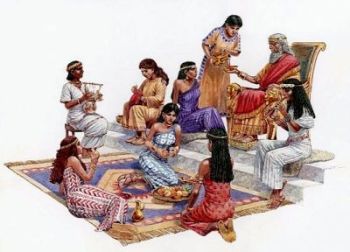
King David’s troublesome sons


 SonsOfDavid.jpg


by

 
Damien F. Mackey


“King David was a national hero in the history of Israel. The author of
the Books of 1, 2  Kings could have made King David look better by embellishing
David’s life and hiding dirty secrets of David’s family life.
For some reason, however, the writer revealed ugly truths about King David’s dysfunctional family”.
 
Rev. Jerry Cho


When David was young, he, filled with a holy zeal, feared no man, not even the giant Goliath, nor did he fear lion or bear (I Samuel 17:32-37):
 
David said to Saul, ‘Let no one lose heart on account of this Philistine; your servant will go and fight him’.
Saul replied, ‘You are not able to go out against this Philistine and fight him; you are only a young man, and he has been a warrior from his youth’.
But David said to Saul, ‘Your servant has been keeping his father’s sheep. When a lion or a bear came and carried off a sheep from the flock, I went after it, struck it and rescued the sheep from its mouth. When it turned on me, I seized it by its hair, struck it and killed it. Your servant has killed both the lion and the bear; this uncircumcised Philistine will be like one of them, because he has defied the armies of the living God. The Lord who rescued me from the paw of the lion and the paw of the bear will rescue me from the hand of this Philistine’.
 
Nothing was too hard for him!
But as he grew older, more famous, and rather more comfortable, he would complain about his sister Zeruiah’s formidable sons, Joab and Abishai (2 Samuel 3:39): ‘... I am this day weak, though anointed king; and these men the sons of Zeruiah be too hard for me: the LORD shall reward the doer of evil according to his wickedness’.
 
It was not only his military officers, though, who were causing King David many headaches.
His sons, too, towards whom he tended to be grossly over-indulgent, would prove extremely troublesome for him.
Rev. Jerry Cho tells of some of it when writing about King David’s dysfunctional family:
 
Text: 2 Samuel 18:5-9, 15, 31-33
Title: David and Absalom
Preacher: Rev. Jerry Cho
Date: Aug. 16, 2009
 
When I visited Boston a few weeks ago, I saw of a statue of Samuel Adams, one of the founding fathers of the United States. In the statue Samuel Adams was lean and tall. But our tour guide said that Samuel Adams was short and plump in real life. The sculptor made Samuel Adams look better because he was a national hero.
 
King David was a national hero in the history of Israel. The author of the Books of 1, 2 Kings could have made King David look better by embellishing David’s life and hiding dirty secrets of David’s family life.
 
For some reason, however, the writer revealed ugly truths about King David’s dysfunctional family. For example, King David had an affair with a married woman. He had her husband killed. King David’s baby son from the woman died at infancy. King David had another son, named Amnon. Amnon raped Tamar, King David’s daughter. Namely, Amnon raped his half sister. Tamar’s brother, Absalom, was infuriated at Amnon, his half brother. So Absalom killed Amnon and ran away.
 
A few years later, King David decided to forgive Absalom, thinking, “Amnon is dead. There is nothing I can do about it. Even though Absalom did things to hurt me, he is still my son. I want to forgive him and make up with him.”
 
Absalom came home and made peace with his father. But the reconciliation and peace was short lived. A conflict, a much more serious conflict between King David and Absalom arose because Absalom realized that he was not going to be the heir of King David. Absalom decided that he would.
 
So Absalom gathered up his followers and tried to kill his father so that he might be a king.
As there were many followers of Absalom, King David had to run for his life. The Bible records that King David walked barefoot escaping from Absalom and crying over the tragic domestic situation.
 
At first Absalom’s army was winning the battle over David’s army. But later the table was turned. David’s army defeated Absalom’s army and was chasing Absalom. King David told his Generals to treat Absalom gently.
 
Absalom was fleeing for his life on horseback. David’s army was gaining on him when Absalom’s long hair was caught by the tree branches. His horse kept running without him. Absalom was dangling in midair and David’s soldiers found him and killed him.
Upon hearing the news, King David became very sad and said to himself, “Absalom, Absalom, my son, it would have been better if I had died instead of you.”
 
Talk about a dysfunctional family. King David had about everything ugly in his family such as incest, rape, domestic violence, rebellion, and intentional homicide among family members. ....

[End of quote]
 
And the reverend Cho has not even gone on to mention Adonijah’s rebellion after Absalom’s, or, later (after David’s death), the apostasy of Solomon with his many foreign wives.


Thursday, October 17, 2019

So-called “Minoans” were the Philistines


Philistines Flee

by
 
Damien F. Mackey


Those whom Sir Arthur Evans fancifully named ‘the Minoans’,
based on the popular legend of King Minos, son of Zeus,
are biblically and historically attested as the Philistines.  


Gavin Menzies has followed Arthur Evans in labelling as “Minoans” the great sea-faring and trading nation that is the very focal point of his fascinating book, The Lost Empire of Atlantis: History's Greatest Mystery Revealed (HarperCollins, 2011). Though the ex-submariner, Menzies, can sometimes ‘go a bit overboard’ - or, should I say, he can become a bit ‘airborne’ (and don’t we all?) - he is often highly informative and is always eminently readable.
According to the brief summary of the book that we find at Menzies’ own site: http://www.gavinmenzies.net/lost-empire-atlantis/the-book/
 
 
... the Minoans. It’s long been known that this extraordinary civilisation, with its great palaces and sea ports based in Crete and nearby Thera (now called Santorini), had a level of sophistication that belied its place in the Bronze Age world but never before has the extent of its reach been uncovered.
 
Through painstaking research, including recent DNA evidence, Menzies has pieced together an incredible picture of a cultured people who traded with India and Mesopotamia, Africa and Western Europe, including Britain and Ireland, and even sailed to North America.
 
Menzies reveals that copper found at Minoan sites can only have come from Lake Superior, and that it was copper, combined with tin from Cornwall and elsewhere, to make bronze, that gave the Minoans their wealth. He uses knowledge gleaned as a naval captain to explore ancient shipbuilding and navigation techniques and explain how the Minoans were able to travel so far. He looks at why the Minoan empire, which was 1500 years ahead of China and Greece in terms of science, architecture, art and language, disappeared so abruptly and what led to her destruction. ...
 
[End of quote]
 
The Philistines
 
Thanks to Dr. Donovan Courville (The Exodus Problem and its Ramifications, Loma Linda CA, 1971), we can trace the Philistines - through their distinctive pottery - all the way back to Neolithic Knossos (Crete). And this, despite J. C. Greenfield’s assertion: “There is no evidence for a Philistine occupation of Crete, nor do the facts about the Philistines, known from archaeological and literary sources, betray any relationship between them and Crete” (IDB, 1962, vol. 1, p. 534). The distinctive type of pottery that Courville has identified as belonging to the biblical Philistines is well described in this quote that he has taken from Kathleen Kenyon:
 
The pottery does in fact provide very useful evidence about culture. The first interesting point is the wealth of a particular class of painted pottery …. The decoration is bichrome, nearly always red and black, and the most typical vessels have a combination of metopes enclosing a bird or a fish with geometric decoration such as a “Union Jack” pattern or a Catherine wheel. At Megiddo the first bichrome pottery is attributed to Stratum X, but all the published material comes from tombs intrusive into this level. It is in fact characteristic of Stratum IX. Similar pottery is found in great profusion in southern Palestine … Very similar vessels are also found on the east coast of Cyprus and on the coastal Syrian sites as far north as Ras Shamra. [Emphasis Courville’s]
 
By contrast, the pottery of the ‘Sea Peoples’ - a maritime confederation confusingly identified sometimes as the early biblical Philistines, their pottery like, but not identical to the distinctive Philistine pottery as described above - was Aegean (Late Helladic), not Cretan.  
 
The indispensable “Table of Nations” (Genesis 10), informs us that the Philistines were a Hamitic people, descendants of Ham’s “son”, Mizraim (or Egypt) (v. 6).
Genesis 10:13: “Mizraim was the father of the Ludites, Anamites, Lehabites, Naphtuhites, Pathrusites, Kasluhites (from whom the Philistines came) and Caphtorites”.
These earliest Philistines would be represented by the users of this distinctive pottery at Neolithic I level Knossos (Dr. Courville):
 
With the evidences thus far noted before us, we are now in a position to examine the archaeological reports from Crete for evidences of the early occupation of this site by the Caphtorim (who are either identical to the Philistines of later Scripture or are closely related to them culturally). We now have at least an approximate idea of the nature of the culture for which we are looking ….
 
… we can hardly be wrong in recognizing the earliest occupants of Crete as the people who represented the beginnings of the people later known in Scripture as the Philistines, by virtue of the stated origin of the Philistines in Crete. This concept holds regardless of the name that may be applied to this early era by scholars.
The only site at which Cretan archaeology has been examined for its earliest occupants is at the site of the palace at Knossos. At this site deep test pits were dug into the earlier occupation levels. If there is any archaeological evidence available from Crete for its earliest period, it should then be found from the archaeology of these test pits. The pottery found there is described by Dr. Furness, who is cited by Hutchinson.
 
“Dr. Furness divides the early Neolithic I fabrics into (a) coarse unburnished ware and (b) fine burnished ware, only differing from the former in that the pot walls are thinner, the clay better mixed, and the burnish more carefully executed. The surface colour is usually black, but examples also occur of red, buff or yellow, sometimes brilliant red or orange, and sometimes highly variegated sherds”.
 
A relation was observed between the decoration of some of this pottery from early Neolithic I in Crete with that at the site of Alalakh ….
 
Continuing to cite Dr. Furness, Hutchinson commented:
 
Dr. Furness justly observes that “as the pottery of the late Neolithic phases seems to have developed at Knossos without a break, it is to the earliest that one must look for evidence of origin of foreign connections”, and she therefore stresses the importance of a small group with plastic decoration that seems mainly confined to the Early Neolithic I levels, consisting of rows of pellets immediately under the rim (paralleled on burnished pottery of Chalcolithic [predynastic] date from Gullucek in the Alaca [Alalakh] district of Asia Minor). [Emphasis Courville’s]
 
While the Archaeological Ages of early Crete cannot with certainty be correlated with the corresponding eras on the mainland, it would seem that Chalcolithic on the mainland is later than Early Neolithic in Crete; hence any influence of one culture on the other is more probably an influence of early Cretan culture on that of the mainland. This is in agreement with Scripture to the effect that the Philistines migrated from Crete to what is now the mainland at some point prior to the time of Abraham.[[1]]
[End of quotes]
 
Late Chalcolithic, we have already learned, pertains to the era of Abram (Abraham), when the Philistines were apparently in southern Canaan:
 
Better archaeological model for Abraham
 
 
We next find the Philistines in the land of Palestine (the Gaza region) at the time of Joshua. Was there a Philistine migration out of Crete (“Caphtor”) at the time of the Exodus migration out of Egypt? (Amos 9:7): “Did I not bring Israel up from Egypt, the Philistines from Caphtor and the Arameans from Kir?”
Dr. John Bimson becomes interesting at this point, as previously I have written:
 
Here I take up Bimson’s account of this biblical tradition:[2]
 
There is a tradition preserved in Joshua 13:2-3 and Judges 3:3 that the Philistines were established in Canaan by the end of the Conquest, and that the Israelites had been unable to oust them from the coastal plain …. There is also an indication that the main Philistine influx had not occurred very much prior to the Conquest. As we shall see below, the Philistines are the people referred to as “the Caphtorim, who came from Caphtor” in Deuteronomy 2:23 … where it is said that a people called the Avvim originally occupied the region around Gaza, and that the Caphtorim “destroyed them and settled in their stead”. Josh. 13:2-3 mentions Philistines and Avvim together as peoples whom the Israelites had failed to dislodge from southern Canaan. This suggests that the Philistines had not completely replaced the Avvim by the end of Joshua’s life. I would suggest, in fact, that the war referred to in Ex. 13:17, which was apparently taking place in “the land of the Philistines” at the time of the Exodus, was the war of the Avvim against the newly arrived Philistines.
 
As conventionally viewed, the end of MB II C coincides with the expulsion of the Hyksos from Egypt. Bimson however, in his efforts to provide a revised stratigraphy for the revision of history, has synchronised MB II C instead with the start of Hyksos rule. He will argue here in some detail that the building and refortifying of cities at this time was the work of the Avvim against the invading Philistines, with some of the new settlements, however, likely having been built by the Philistines themselves.
 
[End of quote]
 
I have further written on Dr. Bimson’s laudable effort to bring some archaeological sanity to this era:
 
Bimson has grappled with trying to distinguish between what might have been archaeological evidence for the Philistines and evidence for the Hyksos, though in actual fact it may be fruitless to try to discern a clear distinction in this case. Thus he writes:[3] 
 
Finds at Tell el-Ajjul, in the Philistine plain, about 5 miles SW of Gaza, present a particularly interesting situation. As I have shown elsewhere, the “Palace I” city (City III) at Tell el-Ajjul was destroyed at the end of the MBA, the following phase of occupation (City II) belonging to LB I …. There is some uncertainty as to exactly when bichrome ware first appeared at Tell el-Ajjul.
Fragments have been found in the courtyard area of Palace I, but some writers suggest that this area remained in use into the period of Palace II, and that the bichrome ware should therefore be regarded as intrusive in the Palace I level ….
It seems feasible to suggest that the invading Philistines were responsible for the destruction of City III, though it is also possible that its destruction was the work of Amalekites occupying the Negeb (where we find them settled a short while after the Exodus; cf. Num. 13:29); in view of Velikovsky’s identification of the biblical Amalekites with the Hyksos … the Amalekite occupation of the Negeb could plausibly be dated, like the Hyksos invasion of Egypt, to roughly the time of the Exodus …. But if our arguments have been correct thus far, the evidence of the bichrome ware favours the Philistines as the newcomers to the site, and as the builders of City II.
[End of quotes]
 
Next we come to the Philistines in the era of King Saul, for a proper appreciation of which I return to Dr. Courville’s thesis. He, initially contrasting the Aegean ware with that of the distinctive Philistine type, has written:
 
The new pottery found at Askelon [Ashkelon] at the opening of Iron I, and correlated with the invasion of the Sea Peoples, was identified as of Aegean origin. A similar, but not identical, pottery has been found in the territory north of Palestine belonging to the much earlier era of late Middle Bronze. By popular views, this is prior to the Israelite occupation of Palestine. By the altered chronology, this is the period of the late judges and the era of Saul.
… That the similar pottery of late Middle Bronze, occurring both in the north and in the south, is related to the culture found only in the south at the later date is apparent from the descriptions of the two cultures. Of this earlier culture, which should be dated to the time of Saul, Miss Kenyon commented:
 
The pottery does in fact provide very useful evidence about culture. The first interesting point is the wealth of a particular class of painted pottery …. The decoration is bichrome, nearly always red and black, and the most typical vessels have a combination of metopes enclosing a bird or a fish with geometric decoration such as a “Union Jack” pattern or a Catherine wheel. At Megiddo the first bichrome pottery is attributed to Stratum X, but all the published material comes from tombs intrusive into this level. It is in fact characteristic of Stratum IX. Similar pottery is found in great profusion in southern Palestine … Very similar vessels are also found on the east coast of Cyprus and on the coastal Syrian sites as far north as Ras Shamra. [Emphasis Courville’s]
 
Drawings of typical examples of this pottery show the same stylized bird with back-turned head that characterized the pottery centuries later at Askelon.
… The anachronisms and anomalies in the current views on the interpretation of this invasion and its effects on Palestine are replaced by a consistent picture, and one that is in agreement with the background provided by Scripture for the later era in the very late [sic] 8th century B.C.
[End of quotes]


[1] It is interesting in light of this that Dr. J. Osgood has synchronized Chalcolithic En-geddi with the era of Abraham. ‘Times of Abraham’, p. 181.
[2] ‘The Arrival of the Philistines’, p. 13.
[3] ‘The Arrival of the Philistines’, pp. 14-15.

Thursday, October 10, 2019

Biblical Minimalists

Mr Bean and Archaeologists


This is the html version of the file http://meforevidence.googlepages.com/TheBibleasHistory.ppt.


Google automatically generates html versions of documents as we crawl the web.


THEBIBLEHISTORYAND ARCHEOLOGY


Part 2


If Moses did not really lead God’s people out of Egypt, as described in the book of Numbers, then the Law of Moses is a man-made tradition.


If David was not the anointed ruler of Israel, then Jesus, the Son of David, was a pretender to a false legacy.


If the stories of Abraham, Isaac, Jacob and Joseph are just the creation of imaginative and pious Jews in the second century BC, then Paul’s statement in Romans 4:16,17 concerning Abraham, “He is the father of us all. As it is written: I have made you a father of many nations.” becomes meaningless. John Oakes


Let us say it very clearly, if the events recorded in the Old Testament are just religious stories with little or no basis in fact, then both the Old and the New Testament lose nearly all their meaning, and Christianity becomes a man-made religion.


Do not be deceived. This is the view of a vast number of the intellectual elite, and believe it or not, even of many supposed Christian theologians today.


HISTORICAL AND ARCHAEOLOGICAL EVIDENCE by John Oakes


On the Hebrew Passover in 2001“Rabbi” David Wolpe of Los Angeles stated that "the way the Bible describes the Exodus is not the way it happened, if it happened at all."


Wolpe made his declaration before 2,000 worshippers at the Conservative Sinai Temple, and the speech was reported on the front page of the Los Angeles Times. The article entitled, "Doubting the Story of Exodus," asserts that archaeology disproves the validity of the Biblical account.


Michael Lemonick (majored in Journalism) wrote for TIME magazine : "... much of what is recorded in the Bible is at best distorted, and some characters and events are probably totally fictional. Most scholars suspect that Abraham, Isaac and Jacob ... never existed“.


In a similar vein, professor Gunnar Heinsohn (Masters Sociology) of the University of Bremen has written


“Mainstream scholars are in the process of deleting Ancient Israel from the history books. The entire period from Abraham the Patriarch in the -21st century (fundamentalist date) to the flowering of the Divided Kingdom in the -9th century (fundamentalist date) is found missing in the archaeological record.


Minimalists and Maximalists


  • Minimalists do not believe that the Bible is historical. Most believe that most of the Old Testament was created during the Persian Empire. Maximalists however believe the Bible is historical but is not inspired.
    MINIMALIST OR REVISIONIST
    ISRAEL FINKLESTEIN
    WILLIAM DEVER
    THOMAS THOMPSON
    PHILIP DAVIES
    To the right are some popular minimalists (sometimes called Revisionists). However, one has changed his mind based on extensive evidence.
    William Dever
    Dever, who once did not believe the Bible was historical, now believes much of it is. Although Dever is not a minimalist or a maximalist, he seems to be more objective when he sees the evidence. He also points out how his former peers are not being objective with the evidence. He has now written a book on the Historical Israel
    Prof. Israel Finkelstein is another famous minimalist who has written books on the history of Israel. He believes that the history of Israel (including the Old Testament) is just a fabrication of stories created in the Persian Empire.
    One forward of his book reads:
    “A revolution is happening in Biblical Archeology. Biblical Archeology is critically examining the Bible against the archeological record and is turning everything we thought we knew upside down. It may disturb many that hold strong political or highly conservative religious beliefs. This will be true of Christians, Muslims and Jews who interpret the Bible literally.
    It will disturb many secular Zionists who justify modern Israel's existence and the proposed annexation of "Judah and Sumaria" based on the Biblical Texts. You can choose to believe this research or not. But it has profound implications for the Israeli Palestinian conflict. This article will review the theories of one of the foremost of these revolutionary Biblical archeologists -Israel Finkelstein. “
    “Finkelstein has had an impact on radically revising the history of Israel in the 10th and 9th centuries BCE. He has transformed the study of history and archaeology in Israeli universities, moving from a "monumental" to a "systemic" study of the archaeological evidence.”
    Yet, says William Dever, Ph.D. (a fellow revisionist) this new dating system "is not supported in print by a single other ranking archaeologist."
    Prof. Israel Finkelstein, a revisionist, theorized a different dating system that places the construction of the gates 100 years after the time of Solomon.
    Revisionists stubbornly dismiss as fictitious most historical aspects of the Bible. To them, the patriarchal period (Abraham, Isaac and Jacob) is all imagination, the story of Joseph and the sojourn in Egypt is fabricated, as are the Exodus and the desert wanderings. The conquest, settlement and united monarchy (Saul, David and Solomon) are mere "propaganda" to quote Philip Davies.
    Marit Skjeggestad, a Scandinavian revisionist, said that on biblical history, "the archaeological record is silent."
    "In fact," asserts Dever, "the archaeological record is not at all silent. It's only that some historians are deaf."
    Revisionists evasive maneuvers are also too much for Dever. He said that this "is an example of the lengths to which scholars will go to avoid the obvious when it does not suit them."
    Dever states:
    None of the revisionists can or will write a history of any “Israel” in the Iron Age.
    Davies denies the existence of either a “biblical” or a “historical” Israel, both being in his
    view post-modernism’s “social constructs”; and his putative “historical” Israel cannot be
    illustrated because he completely ignores the archaeological data, now our primary
    source. (He dismisses Mazar’s handbook in a single footnote as “irrelevant,” because it
    does not extend to his “Persian period Israel”; 1991:24, n. 4).
    Dever continues:Thompson attempted a 450-page History of the Israelite Peoples (sic) in 1992,
    which however he now repudiates as it is “after all hardly history, critically speaking, but
    rather just another rationalistic paraphrase for biblical Israel” (1997:178, 179). His 1999
    400-page book The Mythic Past, despite its subtitle Archaeology and the Myth of Israel,
    has nothing whatsoever to do with modern archaeology. And the few pages devoted to
    Iron Age Israel (1999:158-168; 179-190 [23 pages]) scarcely even mention “Israel” by
    name, speaking rather of “southern Syria’s marginal fringe” or “the (Assyrian) province
    of Samarina.”
    Dever sums up the attitude of objective scholars:
    "In my view, most of the revisionists are no longer honest scholars, weighing all the evidence, attempting to be objective and fair-minded historians, seeking the truth. Determined to unmask the ideology of others, they have become ideologues themselves. The revisionist and the postmoderns are dangerous because they have created a kind of relativism -- an anything goes attitude -- that makes serious, critical inquiry difficult if not impossible."
    In the words of Anson Rainey:
    "As someone who studies ancient inscriptions in the original, I have a responsibility to warn the lay audience that the new fad (revisionism) represented by Philip Davies and his ilk is merely a circle of dilettantes. Their view that nothing in the biblical tradition is earlier than the Persian period, especially their denial of the existence of the united monarchy, is a figment of their vain imagination. The name 'House of David' in the Tel Dan and Mesha inscriptions sounds the death knell to their specious conceit. Biblical scholarship and instruction should completely ignore the (revisionist) school. They have nothing to teach us."
    Most archaeologists are not minimalists like Israel Finkelstein.
    The California Institute of Ancient Studies along with most Archeologists and Historians disagree with such skeptics. The few minimalist Dever-Finkelstein followers (one who authored "The Bible Unearthed") have been proven wrong simply because they have used the outdated Sothic Chronology. Even on an ABC special, the archeologists did have some embarrassing moments such as when the founder of the famous Tel Dan inscription referring to the "House of David" showed that actual inscription to the cameras and laughed at the early attempts by the archaeologists to explain it away. David himself was grudgingly accorded a real existence, based largely on the Tel Dan evidence.
    THE HOUSE OF DAVID
    by
    Damien Mackey
    Gate at Tel Dan
    In fact, the program's presenter himself came to be convinced that a massive altar on Mount Ebal in Samaria was the one that Joshua had built there (Joshua 8:30). Indeed it was made of "unhewn stones" (v.31), and the archaeological data discovered around this altar seemed to fit very well that this was indeed an ancient Israelite site of sacrifice.
    THE HOUSE OF DAVID
    by
    Damien Mackey
    Even a statement made by a true scholar on the subject, Prof. Adam Zartal, chairman of the Dept. of Archaeology at the University of Haifa who had this to say about history, archaeology and the Bible:
    "After years of research, I believe it is impossible to explore Israel's origins without the Bible. At the same time, the research should be as objective as possible. The Bible should be used cautiously and critically. But again and again we have seen the historical value of the Bible. Again and again we have seen that an accurate memory has been preserved in its transmuted narratives, waiting to be unearthed and exposed by archaeological fieldwork and critical mind work."
    “Dr. and Professor
    Eilat Mazar is a third-generation Israeli archaeologist, specializing in Jerusalem and Phoenician archaeology. She has worked on the Temple Mount excavations, as well as excavations at Achzib and Bethlehem, and is a visiting scholar with the Institute of Archaeology AND the Hebrew University of Jerusalem.”
    Dr. Eilat Mazar: Israeli Archaeologist / Discovered the King David's Palace in February 2005.
    Alongside her laptop on a paper-strewn desk sits the most telling object: a heavily marked Bible. Like her grandfather and father before her, Mazar is a believer in the Bible’s historical reliability.
    “One of the many things I learned from my grandfather was how to relate to the biblical text,” she says. “Pore over it again and again, for it contains within it descriptions of genuine historical reality.” She adds, “I work with the Bible in one hand and the tools of excavation in the other. That’s what biblical archaeologists do. The Bible is the most important historical source and therefore deserves special attention.”
    This approach led Mazar to the site she now believes is the northern edge of King David’s palace in an area known as the City of David. When she set out on her quest in search of the palace in 1997, she turned to her Bible. She looked in……
    Second Book of Samuel chapter five, verse 17. “When the Philistines came to fight, the Bible says David went down from his palace to the fortress,” Mazar says. “I wondered down from where? It’s very reasonable to assume that when the Bible describes David going down he came from a higher place. The only higher place is from the north.”
    It was a crucial observation. Mazar reasoned the only direction where the topography is higher would be just north of the City of David, outside the walls of the Old City. She began excavating in February of 2005. The finds came quickly. Surprisingly intact, just two yards beneath ground level, were Byzantine-era artifacts, including a fully-preserved room with mosaic floors dating to the 4th to 6th centuries C.E. When Mazar peeled back the room, she uncovered water cisterns, pools and a mikvah from the Second Temple period.
    But it was what was under these that would prove to be the most startling. The Second Temple remains were directly on top of thick foundation walls that protruded in all directions—and even beyond—the length and width of her 30-by-10 meter excavation site.
    The pottery found under the building—that is, from before the building’s construction—dated back to the 12th to 11th centuries B.C.E.—just before David conquered Jerusalem.
    But inside one of the rooms, Mazar’s team found pottery from the 10th to 9th century B.C.E., indicating that the building was in use during the period of David’s reign in Jerusalem. In addition, Mazar found a seal impression, called a bulla, of a late 7th-century royal official named Jehucal, son of Shelemiah, son of Shevi, who is mentioned twice in the Book of Jeremiah (37:3 and 38:1). “The bulla find—it’s an amazing find,” she says, adding that it proves “that the site was an important center in the ancient Israelite monarchy for four centuries.”
    Jeremiah 37: 3
    And Zedekiah the king sent Jehucal the son of Shelemiah, and Zephaniah the son of Maaseiah, the priest, to the prophet Jeremiah, saying, Pray now unto Jehovah our God for us.
    Jeremiah 38: 1


  • 1 And Shephatiah the son of Mattan, and Gedaliah the son of Pashhur, and Jucal the son of Shelemiah, and Pashhur the son of Malchijah, heard the words that Jeremiah spake unto all the people, saying,
     
  • 2 Thus saith Jehovah, He that abideth in this city shall die by the sword, by the famine, and by the pestilence; but he that goeth forth to the Chaldeans shall live, and his life shall be unto him for a prey, and he shall live.
    Prof. Yigael Yadin, Dean of Archeology in the University of Jerusalem, has also further confirmed the Bible’s records in other areas of Solomon’s accomplishments. He was asked if archeology is was confirming the Biblical accounts. He replied:
    “I would say, generally speaking, that this is very definitely so. I would say that the historical portions of the Bible are thus far being proved true by archeologists. I would go one step further, and say that a biblical diary has actually helped us archeologists find our way and understand the data.
    The Bible tells us, for example, that King Solomon built three strategic cities. One is Megiddo, and one is Gezer, near Jerusalem. And we excavated Hazor, the third Solomonic city.
    “Were it not for the passage in the Bible which tells us that Solomon built these three cities we would not have been able to identify them. The actual discovery of these gates proved that this example of a verse in the Bible was correct. Now this is only one example. Wherever we go in this land of the Bible we illuminate our finds with the Bible, and the finds, I would say, are illuminating the Bible.”
    HAZOR
    GEZER
    MEGIDDO
    Dr. David Rohl
    "I consider the Bible a historical document just like the writings of Herodotus or a text of Rameses II," says Rohl. "It's ridiculous to throw it in the dustbin just because it's a religious text. If so strong a tradition evolves out of the past, it is likely to have a genuine geographical setting."
    CONCLUSION


  • THE ACCOUNTS OF THE BIBLE HAVE BEEN SHOWN TO BE TRUE BY SIGNIFICANT ARCHEOLOGICAL AND HISTORICAL EVIDENCES.
     
  • THE BIBLE IS THE BEST HISTORICAL DOCUMENT WE HAVE FOR THE MIDDLE EAST.
     
  • UNLIKE OTHER WRITINGS, THIS BOOK FITS PERFECTLY FROM WRITER TO WRITER LIVING CENTURIES APART.